

Sep 22, 2026
A garage door heavy to lift is a balance problem, not a test of arm strength. The panel can weigh 150 to 250 pounds. Torsion or extension springs are supposed to offset almost all of that so you, or the opener, only guide the door. When the door suddenly feels like it doubled in weight, a spring has lost tension, a cable is slipping, or something in the track is binding.
Homeowners around St. Johns County often notice it after a humid summer: the door that rose with one hand in the spring now needs a shoulder. LiftUp Garage Door Services replaces springs, cables, and worn hardware. Call (904) 503-6273 if the door is already stuck, or read the checks below before you pull harder.
Table of contents
- What a heavy door actually feels like
- Why springs do the lifting
- Other reasons the door fights you
- Safe checks you can do
- Work that belongs with a technician
- Humidity, salt air, and aging hardware
- FAQ
What a heavy door actually feels like
People describe the same handful of clues. The door opens a few inches and stalls. You can raise it, but it drops the moment you let go. One side climbs while the other hangs. The opener hums, the light flashes, and the panel barely moves. A door that used to stay put halfway now drifts down on its own.
Those signs point to lost counterbalance. A healthy door, with the opener disconnected, should stay roughly where you place it. If it slams shut or shoots upward, the springs are no longer matched to the door weight. A loud bang followed by a door you can barely budge is the classic broken torsion spring. A slow increase over months is more often a tired spring, dry rollers, or a track that has shifted.
Why springs do the lifting
Residential doors use either a torsion spring on a shaft above the opening or extension springs along the horizontal tracks. Both store energy so the door feels closer to 10–20 pounds in your hands. The opener is sized for a balanced door.
Springs are rated in cycles, often around 10,000 open-and-close cycles for a standard residential set. A family that uses the garage as the main door can burn through that in six to ten years. Once a coil separates, the full door weight lands on the opener or on you.
Matching a replacement spring is not a guess based on color. Length, wire size, inside diameter, and wind direction all change the lift. A spring that is too weak leaves the door heavy. A spring that is too strong makes the door fly up and can pull the cables off the drums. That is why garage door spring replacement includes a balance test with the opener unhooked, not just a new coil bolted in place.
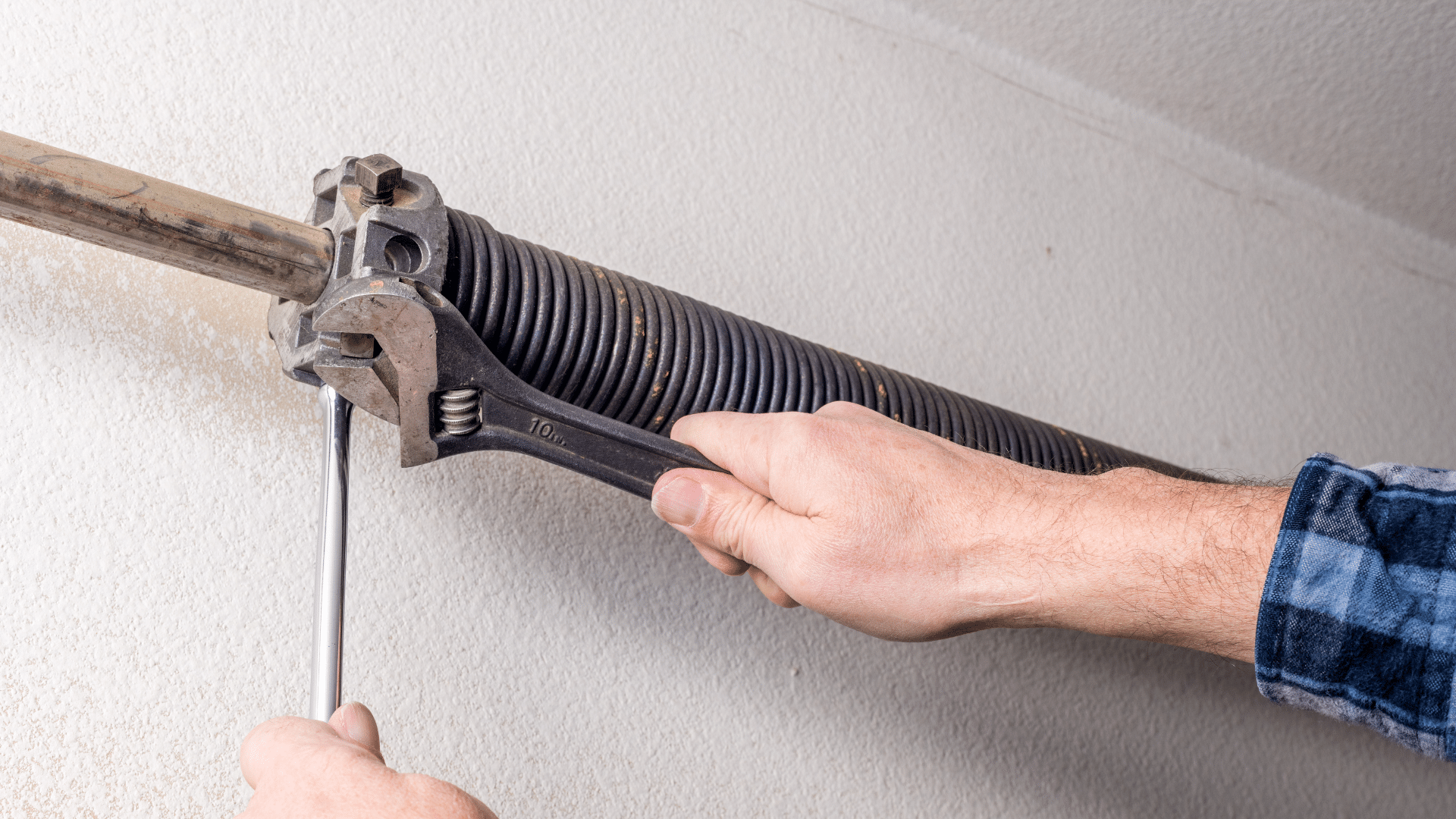 Technician using a wrench on a torsion spring when a garage door is heavy to lift
If you are comparing price before you book, the spring replacement cost guide covers what changes the quote: single versus dual springs, standard versus high-cycle wire, and whether cables and drums need to be replaced at the same time.
Other reasons the door fights you
Springs are the usual cause, but they are not the only one. A heavy feel can come from parts that add drag:
- Frayed or loose cables. Cables carry spring tension to the bottom brackets. If a cable has jumped the drum or a strand has broken, one side of the door carries extra weight. Cable work is dangerous while the spring is wound. See door cable replacement rather than rewinding a loose cable by hand.
- Dry or cracked rollers. Metal rollers on a dirty track feel like the door gained fifty pounds. Nylon rollers that have flattened develop a flat spot you can hear as a thump each time they pass a hinge.
- Track pinch. A bracket knocked by a ladder or a bumper can narrow the track so the rollers bind halfway up. The door feels normal at the floor and brutal at waist height.
- Opener force limits. If the motor stops and reverses, the door may still be balanced. The opener is hitting its force setting because of drag, or the limits were never set after a previous repair.
- Panel damage or added weight. A new insulation kit, a dented section, or a wood door swollen after weeks of rain changes the weight the original springs were built for.
Disconnect the opener only if you can do it safely from the floor with the red release cord, and only if the door is fully closed. A broken spring plus an open door can let the panel drop when you pull that cord.
Safe checks you can do
You can gather useful information without touching the spring shaft:
- Look at the spring above the door. A gap in the coil, about two inches or more, usually means that spring has broken.
- Look at both cables. They should be taut and seated in the drum grooves, with no fuzzy strands near the bottom bracket.
- Watch a full cycle from inside the garage, standing clear of the panel. Note where it hesitates and whether one side leads.
- Check the photo eyes. A door that will not close is a different problem from a door that will not lift, but dirty sensors make people force the wall button and then blame the springs.
- Listen. A single bang, then silence, is different from a grind that has been getting worse for weeks.
Note the door size and whether you see one spring or two. Do not put a wrench on the winding cone. Stored energy in a torsion spring is enough to break a wrist.
The U.S. Consumer Product Safety Commission documents how garage doors and their springs injure people who try to adjust them without the right tools. Their overview is on the CPSC garage door safety page.
Work that belongs with a technician
Spring winding, cable replacement, and bottom-bracket service stay with trained techs. The bottom bracket is under spring tension even when the door is closed. People get hurt when they unbolt it to “free” a stuck roller.
A proper visit unwinds the old spring with winding bars, replaces rusty cables, sets the drums so both sides lift together, and checks that the door holds at mid-travel. Opener force limits get reset so the motor is not still pushing a door that feels twice as heavy.
If the door is open and will not stay up, or a car is trapped before weather moves in, use emergency garage door repair. Most other repair calls can be booked through same-day garage door service.
Humidity, salt air, and aging hardware
Coastal air pits steel. Lower hinges and the bottom of vertical tracks rust first, which adds drag you feel as extra weight. A door that was balanced in March can creep by late summer if rollers are dry and a spring is near the end of its cycle count. Rinsing salt off the lower track and keeping hinges lubricated with a garage-door lubricant (not a heavy grease that holds grit) slows that process. It does not fix a broken spring.
If the door only feels heavy during the wettest weeks, say so when you call. Wood can swell; steel hardware still corrodes. After a storm, look for debris in the track. A bent section makes a good spring feel weak. Garage door maintenance once a year catches that drift before the door will not rise.
FAQ
Get the weight off the opener
If the door is a garage door heavy to lift, treat it as a spring or cable issue until someone confirms otherwise. Call LiftUp Garage Door Services at (904) 503-6273 or send photos through the contact page. Describe whether you heard a bang, whether one side hangs lower, and whether the opener still runs. That is enough to show up with the right spring stock.
Recent Posts
- Why a Garage Door Feels Heavy to Lift
- Garage Door Not Opening: What to Check First
- Garage Door Making Noise: What Each Sound Means
- Garage Door Off Track: What to Do Next
- Garage Door Maintenance: What Northeast Florida Homeowners Should Do