

Sep 18, 2026
A garage door making noise is telling you which part is wearing out. A squeak at the hinges is not the same failure as a grind in the track or a single bang from the spring shaft. Sorting the sound saves you from replacing an opener when the rollers are the real problem.
We hear the same patterns on service calls from Ponte Vedra Beach and Nocatee: a door that was quiet in the spring starts popping every morning by late summer. LiftUp Garage Door Services tracks down the source and replaces the worn part. Call (904) 503-6273 if the noise showed up with a bang or the door is moving crooked. Otherwise, use the sound guide below.
Table of contents
- Match the sound to the part
- Squeaks and dry hinges
- Grinding, scraping, and thumps
- Bangs, pops, and spring noise
- Opener noise versus door noise
- What actually quiets a door
- FAQ
Match the sound to the part
Stand inside the garage, off to the side, and run one full cycle. Note when the sound happens: only at the start, all the way up, only as the rollers pass the curve, or only when the opener starts.
- High squeak or chirp — dry hinges, dry bearings, or a roller stem that needs lubricant.
- Rhythmic thump — a flat spot on a roller, once per revolution.
- Metal grind or scrape — a roller rubbing the track, a loose track bracket, or a hinge that is bent into the panel.
- Single loud bang — often a torsion spring breaking. The door may still move once, then feel extremely heavy.
- Rattle at the motor — chain slap, a loose cover, or a failing opener gear. The door itself may be quiet if you disconnect the opener and lift by hand.
If the door is quiet when you lift it by hand and loud only when the opener runs, spend your time on the opener rail and the door arm, not on the panels.
Squeaks and dry hinges
Hinges and roller stems dry out. Humidity washes thin oil away and leaves a film of dust. A light garage-door lubricant on the hinge pins and the roller bearings usually settles a simple squeak. Use a product labeled for garage doors. WD-40-style solvents cut grease and then evaporate, so the squeak returns in a few days. Heavy axle grease on the track collects sand and makes the grind worse.
Do not spray lubricant on the photo eyes, the track running surface, or the nylon tire of a roller. Lubricant on nylon rollers makes them slip and pick up grit. Metal rollers can take a drop on the bearing only.
If the squeak continues after a careful lube, a hinge barrel may be worn oval or a roller stem may be scored. Replacement is a short job during garage door maintenance, and it is cheaper than letting a dry hinge chew into the stile.
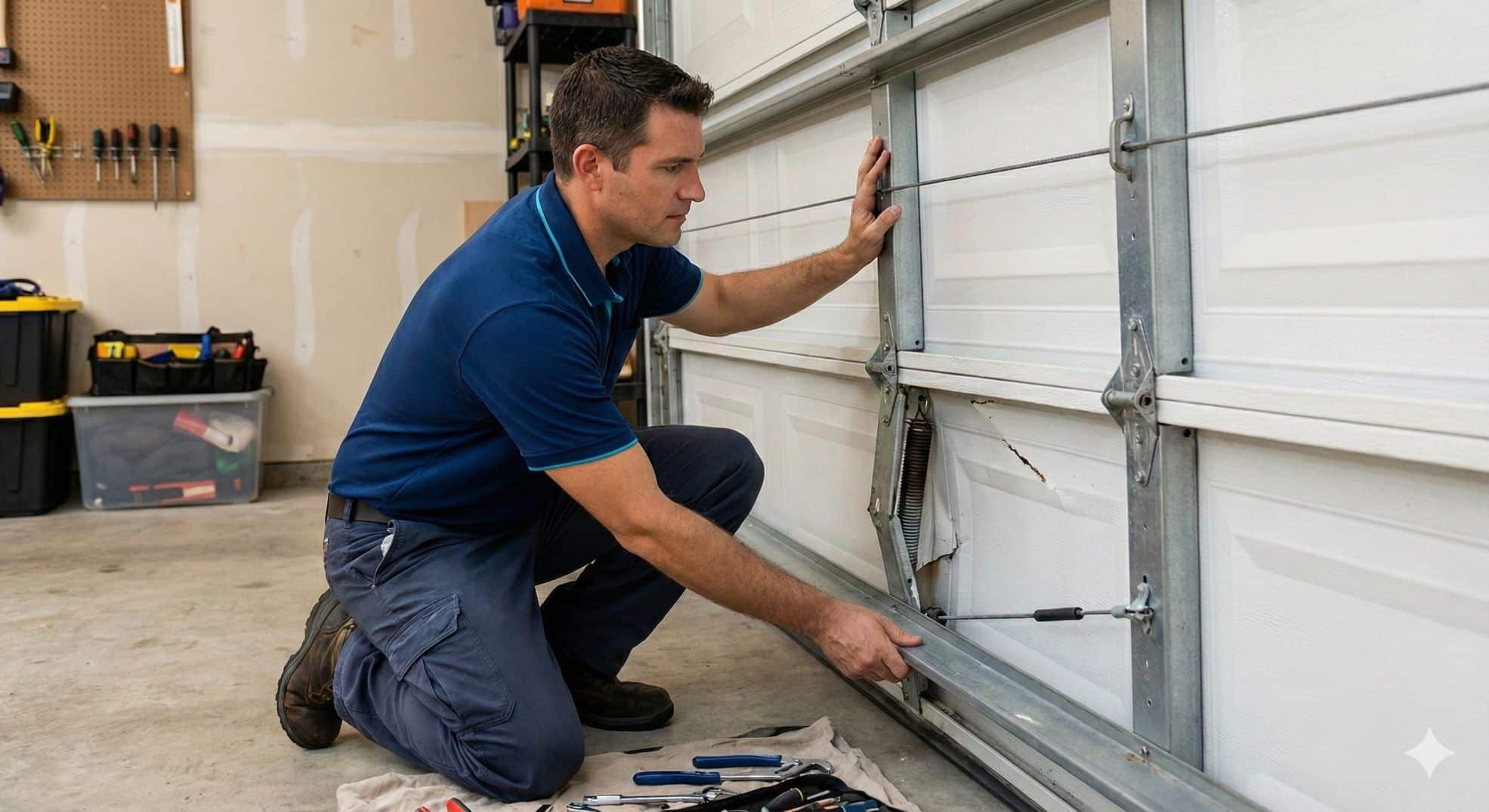 Technician aligning the track on a garage door making noise
Grinding, scraping, and thumps
Grinding means metal is touching metal the wrong way. Look down the vertical track with the door closed. The rollers should sit in the track without the stem rubbing the edge. A bracket that has shifted after a bump pulls the track inward and the roller flange scrapes.
A thump each time a roller passes a hinge is a flat-spotted roller. You can sometimes see the flat by turning the wheel by hand with the door closed. Nylon rollers quiet this more than another shot of lubricant. Steel rollers are louder by design; if the door has always been a bit loud and recently got worse, look for a cracked wheel or a dry bearing rather than blaming the whole door.
Horizontal tracks that sag make the door groan as it transitions onto the curve. The track should slope slightly down toward the back of the garage so the door wants to stay open, but it should not bow. Hangers from the ceiling joists hold that slope. A loose hanger is a common find in garages where storage was hung from the same hardware.
Track alignment is part of door track repair. If a roller has already jumped out, stop using the door. A grind you can still cycle is an adjustment. A door sitting crooked is a repair, not a lubrication visit.
Bangs, pops, and spring noise
A single bang, like a firecracker in the garage, is the sound homeowners remember. Torsion springs live under high tension. When a coil breaks, the shaft can jump and the door drops onto the remaining spring or onto the opener. Check the spring for a gap before you run another cycle.
Repeated popping along the top of the door can be a different issue: hinges walking on loose screws, or the top fixture tapping the header as the door turns the corner. Tighten loose hinge screws with a hand tool. Do not add force to the spring set screws. Those cones are what hold the wound spring on the shaft.
Extension springs should have a safety cable through the center. If an extension spring pops and there is no cable, the spring can fly across the garage. That is a stop-using-the-door situation. Spring replacement includes the safety cable and a balance check so the new springs are not just quieter for a week.
The CPSC notes on garage door injuries focus on springs and on doors that come down unexpectedly. A new bang belongs in that category until someone confirms the spring is intact.
Opener noise versus door noise
Chain-drive openers have a low rattle even when they are healthy. Belt-drive units are quieter. A new clunk or a grinding from the motor head is the opener, especially if the chain slaps the rail. Tighten a loose chain only to the spec in the manual. An overtight chain wears the sprocket and can bind the trolley.
Gears inside many opener heads are nylon. They strip and then the motor spins while the door barely moves, often with a grinding whine. That is opener repair or a replacement, depending on the age of the unit and whether parts are still sold. A noisy door with a healthy opener is the opposite job: rollers, hinges, and track.
Vibration that you feel in the ceiling more than you hear at the door can be the opener bracket shaking against a joist. Tightening the punch-angle hardware and adding a rubber isolator is a small fix. It will not silence a flat roller.
What actually quiets a door
In order, the changes that make a difference are: nylon rollers if you still have steel, new hinges where the barrels are worn, track brackets set so the rollers are not scraping, a spring system that is actually balanced, and an opener that is not fighting that balance. Lubricant is step one, not the whole plan.
A yearly tune-up catches loose hardware before it becomes a grind. Our maintenance guide lists what a homeowner can lube and what should wait for a technician. If the noise started the same day the door began to feel heavy, skip the lubricant and schedule spring service.
After the repair, run two cycles before the tech leaves. A door can be quiet on the way up and scrape on the way down if the track is tight only at the floor.
FAQ
Get the sound identified
If you have a garage door making noise that lubricant did not calm, call LiftUp Garage Door Services at (904) 503-6273 or write through the contact page. A short phone video of one cycle, filmed from inside the garage, is often enough to tell a roller problem from a spring problem before the truck is loaded.
Recent Posts
- Why a Garage Door Feels Heavy to Lift
- Garage Door Not Opening: What to Check First
- Garage Door Making Noise: What Each Sound Means
- Garage Door Off Track: What to Do Next
- Garage Door Maintenance: What Northeast Florida Homeowners Should Do