
Regular garage door maintenance keeps a heavy moving system safe, quiet, and reliable through Northeast Florida humidity, salt air, and storm season. Most homeowners use the garage as the main entry—school runs, groceries, and work commutes all add cycles that wear springs, rollers, and opener hardware faster than a weekend-only door.
LiftUp Garage Door Services performs tune-ups across St. Johns County, Ponte Vedra, Nocatee, and the Jacksonville Southside. Call (904) 921-8212 to schedule maintenance or ask what your door needs after a noisy season.
Table of contents
- Why maintenance matters
- What homeowners can do safely
- What a professional tune-up includes
- Florida climate effects
- Warning signs between visits
- How often to schedule service
- FAQ
Why garage door maintenance matters
A residential garage door can weigh 150–250 pounds or more. Springs counterbalance that weight so the opener motor—and your back—are not doing the heavy lifting. When rollers seize, tracks shift, or springs lose tension, the opener strains, cables fray, and safety sensors may misalign. Small drift becomes a stuck door on a rainy morning or a door that closes unevenly on one side.
Maintenance is cheaper than emergency garage door repair after a spring snaps or a cable jumps the drum. It also extends opener life: a balanced door needs less force from the motor. If you rely on the garage daily, think of maintenance like oil changes for a vehicle you use twice a day.
Safe homeowner tasks (and what to skip)
You can handle light upkeep without touching high-tension springs or cables:
- Visual inspection — Look for frayed cables, cracked rollers, rust at the bottom of vertical tracks, and gaps in weather sealing.
- Photo-eye test — Place a box in the door path; the door should reverse on the way down. Clean lenses gently if dust or spider webs block the beam.
- Hardware check — Snug loose hinge bolts with a socket wrench (do not over-tighten). Listen for grinding or popping during a slow manual test.
- Lubrication — Use silicone or white lithium on hinges and rollers; avoid greasing nylon rollers or the track itself, which attracts grit.
Do not adjust torsion springs, unwind cables, or remove bottom brackets. Those components store serious tension. Spring work belongs with trained technicians—see our garage door spring replacement page if a door suddenly feels twice as heavy.
What professional garage door maintenance includes
Our garage door maintenance visits go beyond a quick spray of lubricant. A typical tune-up covers:
- Balance test with the opener disconnected (door should hold halfway without drifting)
- Spring tension check and hardware torque on plates and drums
- Roller and hinge inspection; replacement recommendations when plastic wheels are cracked
- Track alignment and bracket security
- Cable condition review (fraying or rust at the bottom loop)
- Opener force and travel limits; safety reversal verification
- Weather seal and bottom rubber assessment
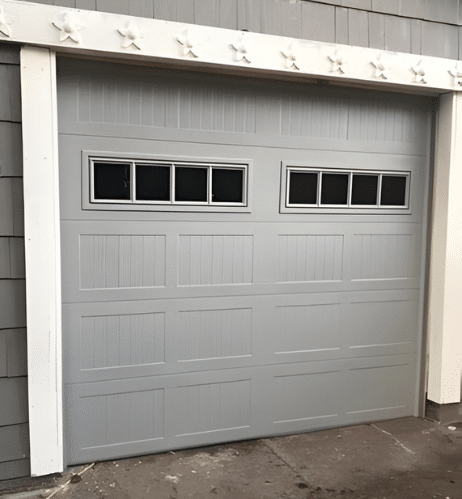
We note anything trending toward failure so you can plan repairs before a holiday weekend or storm forecast. That proactive approach is especially helpful for doors on coastal properties where corrosion accelerates at the lower track sections.
How Northeast Florida climate affects garage doors
Humidity swells wooden doors slightly and encourages rust on steel hardware. Salt air near St. Augustine Beach and Ponte Vedra can pit lower hinges if rinsing and lubrication are neglected. Summer heat expands metal tracks; a door that balanced in March may creep open or closed by August if springs are aging.
Hurricane season adds another reason to maintain hardware: reinforced doors and properly tensioned springs handle wind pressure better than loose panels rattling in the frame. After named storms, schedule a quick inspection even if the door still moves—impact debris can bend a track section you might not notice from the driveway.
Warning signs between maintenance visits
Call for service—not just the next tune-up—if you notice:
- A loud bang from the garage (often a spring breaking)
- The door opens a few inches then stops while the motor hums
- One side of the door rises faster than the other
- Visible cable slack or strands separating
- Opener lights flashing error codes repeatedly
For doors stuck open before weather arrives, use emergency garage door repair rather than forcing the panel by hand.
How often to schedule maintenance
Most families benefit from a professional tune-up once a year. High-cycle homes—multiple drivers, kids coming and going, or a home-based business using the bay—may need twice-yearly checks. New installs should get a follow-up balance check after the first month of use while cables and springs settle.
Pair maintenance with opener battery checks if you have a backup unit, and test manual release handles so you know how to disconnect the door if power fails during a storm.
Document the date of each visit on a calendar or in your home file. When you sell the property, buyers appreciate proof that springs and openers were serviced—especially on doors facing the street and visible from the curb.
HOA communities in Nocatee and World Golf Village sometimes require doors to remain in good cosmetic condition; maintenance keeps hardware quiet and panels aligned so neighbors are not hearing rattles at dawn.
A written checklist from your technician—roller condition, spring cycle estimate, opener force reading—helps you plan upgrades before the next failure instead of reacting to it.
Garage door maintenance FAQ
Is maintenance different from a repair visit?
Yes. Maintenance is preventive—lubrication, adjustment, and inspection. Repair addresses a specific failure like a broken spring or bent track.
Can maintenance lower noise?
Often. Worn rollers and dry hinges are common noise sources. If the door is still loud after a tune-up, ask about garage door opener repair or a belt-drive upgrade during a quieter motor install.
Noise that sounds like a train usually means metal rollers on a steel track—upgrading to nylon rollers during maintenance can make an immediate difference without replacing the entire door.
Do you service my neighborhood?
We cover St. Johns County, Ponte Vedra, Nocatee, World Golf Village, and nearby communities—see service areas or contact to confirm timing.
Should I maintain a brand-new door?
Yes. Even new systems need balance verification after the first weeks of use and annual checks thereafter to keep warranties valid and hardware aligned.
What products should I avoid on my door?
Skip WD-40 on rollers and heavy grease on tracks—it attracts sand and grit common in Florida driveways. Silicone-based lubricants on hinges and bearing surfaces are usually the right choice.
Can maintenance prevent spring failure?
It cannot stop age-related metal fatigue, but balance tests catch doors that are over-stressing one spring before it snaps. Replacing matched pairs on schedule is safer than waiting for a loud break.
Does a smart opener change maintenance needs?
Wi-Fi openers still rely on the same springs and tracks. App alerts for unusual force or travel time are helpful, but they do not replace physical inspection of cables and rollers twice a year.
Consistent garage door maintenance protects your home’s largest moving wall. Schedule a tune-up with LiftUp Garage Door Services at (904) 921-8212 or request a visit through our contact page.